

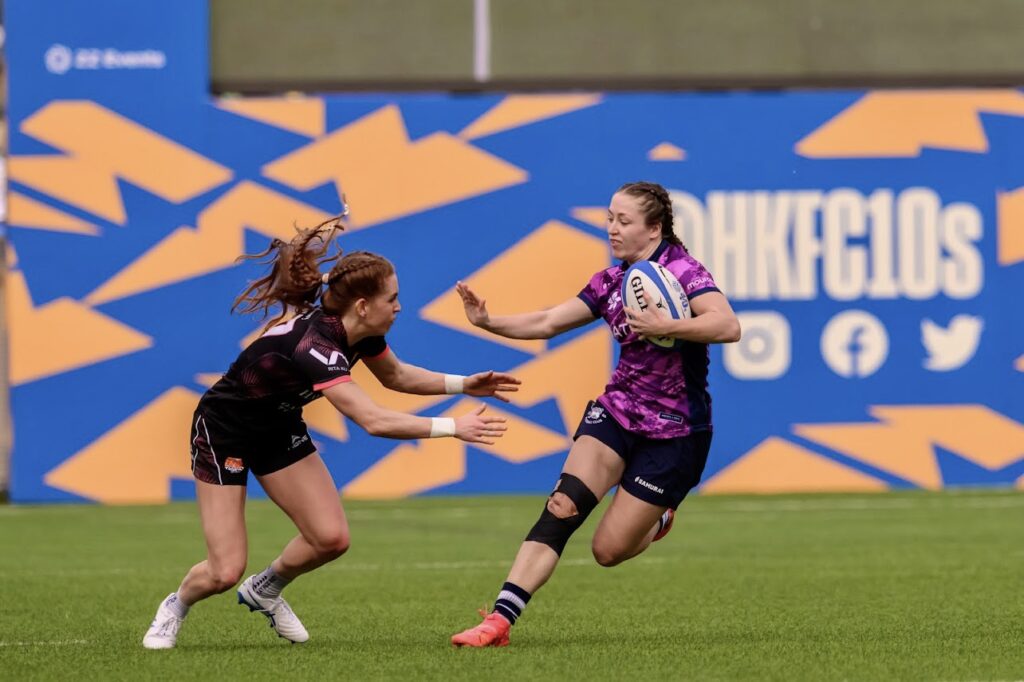
For my inquiry project, I am interested in exploring why the representation of female athletes in children’s literature is important. As part of my inquiry project, I aim to create a children’s book about female rugby athletes that challenges gender stereotypes in sport.
“Children’s first contact with media and culture often comes from books they are exposed to in the home and at school.”
J.T. Colleti, V. Allan, & L.J. Martin (2021)
The representation of female athletes in children’s literature holds personal significance for me. Growing up, I played many sports, but all the role models I saw in the media were men. It can be hard to envision success for yourself in the sports you love when there is limited female representation at a high level. Women are represented less in sports fiction books, leaving young girls with limited female athlete role models. This contributes to sport dropout rates and lower perceptions of self-worth; If young girls do not have any role models to look up to in sport, they can feel like they do not belong in that space (Colleti, Allan, & Martin, 2021). Young girls can miss the opportunity to participate and compete in sports, and do not receive the physical and psychosocial benefits that sports can offer them.
Research has shown that sports fiction books representing female athletes often reaffirm rather than challenge problematic ideologies in sport (Colleti, Allan, & Martin, 2021). When female athletes are represented in children’s literature, they often reinforce traditional gender stereotypes. Female athletes are often portrayed as atypical or outside the norm, and they must prove they are exceptionally skilled to be accepted as athletes. Books commonly fail to acknowledge that femininity and athleticism can exist simultaneously, portraying female athletes as lacking femininity.
Resources for further exploration
To learn more about gender stereotypes in children’s literature, read this article:
J.T. Colleti, V. Allan, & L.J. Martin (2021). Reading between the lines: Gender stereotypes in children’s sport-based books. Women in Sport and Physical Activity Journal, 29(1), 1-11. https://doi.org/10.1123/wspaj.2020-0036


There are very few books that represent women in contact sports, such as rugby. However, there has been a notable shift in recent years, with significant increases in support for women’s sports. In 2023, the Professional Women’s Hockey League was established, with its inaugural season launching the following year. Women’s basketball has witnessed incredible growth in the past few years, with record-breaking viewership and investments. In 2024, the Women’s Rugby Sevens Olympic Tournament boasted a new attendance record for women’s rugby with a total of 66,000 people crowding the stands on the final day. That attendance record was beaten the very next year, when 81,885 people attended the Women’s Rugby World Cup final in London (England vs. Canada), and 5.8 million viewers watched online. The support for women’s sports is only expected to grow over the coming years, and these gaps in representation in the field of children’s literature must be addressed. Creating a children’s book about female rugby athletes will provide young children with a powerful representation of women in sport.
Resources for further exploration
To learn more about the rising popularity of women’s sports, read this CBC article:
T. De Boer, (2025, July 4). Women’s sports are booming. Why now? CBC Sports. Link to webpage

Planning My Inquiry Process
Research
To start my inquiry project, I plan to engage in research on my topic. This includes examining:
- Current children’s books with female athlete representation
- Importance of literature on children’s development
- Female athlete representation in the media
- Key aspects/components involved in creating a children’s book
Planning
The next step in my inquiry is to apply the knowledge I have gathered through my research in creating my children’s book. In the planning phase, I need to determine the grade level, identify what curricular competencies I aim to address in my book, and create a storyline/narrative focus. I also need to decide what kind of artwork/illustrative style I want to use in my book.
Putting It All Together
Finally, in this stage of my inquiry project, I will create my children’s book. In addition to my children’s book, I will reflect on the process and the main takeaways from my inquiry project. I will identify the learnings, challenges, and limitations of the children’s book I created.
Resources:
- J.T. Colleti, V. Allan, & L.J. Martin (2021). Reading between the lines: Gender stereotypes in children’s sport-based books. Women in Sport and Physical Activity Journal, 29(1), 1-11. https://doi.org/10.1123/wspaj.2020-0036
- London (2025, October 8). More than 1.4 million attended world’s biggest women’s sporting events in London this year. Mayor of London, London Assembly. Link to webpage
- T. De Boer, (2025, July 4). Women’s sports are booming. Why now? CBC Sports. Link to webpage
Comments
One response to “Representation of Female Athletes in Children’s Literature”
Ella, what an admirable inquiry! Well stated, along with supporting research already! The pictures really add to inviting the reader to explore more. You have labelled the pictures, but you need to indicate their source, and you need permission to use copyright materials, if they are.
You are taking on a lot by creating a book with illustrations. I suspect you may need some help in both the design and production. I am not sure if I can help, but reach out if you need to.
Good luck on your inquiry journey!